



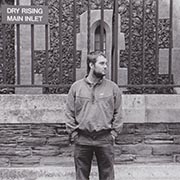
Oliver Leith’s “Dream Horse” (2018), for soprano, bass, and chamber orchestra, sees the heartfelt and surreal collide. Its eclectic text reflects the scope of the London-based composer’s imagination – by turns sweet and subversive – drawing on the 1923 John Wayne Western musical “Riders of Destiny”, a list of horses named ‘Dream _____’ and Wordsworth’s “The Tables Turned”; Thomas Adès premiered the 15-minute work at the Tanglewood Festival. “Taxa” (2013), recently taken up by Ilan Volkov and the BBC Symphony Orchestra, also reflects his quietly anarchic character; the piece superimposes five expressive postures from mixed groups of instruments – “Sustain”, “Echo”, “Flutter”, “Grind”, “Remnants” – to create a teeming whole that riffs on a fragment of Bach.
Writing in “Tempo”, Caroline Potter called Leith’s music “accidental still life” that “makes the everyday strange, and the strange everyday”. 2019’s “Honey Siren” blurs the boundary of quotidian non-musical and musical sound – the 17-minute work for string ensemble, cast in three movements, imagines wailing sirens, both joyful and disconcerting in mood. Twisting pitch and harmony through a carefully calibrated microtonal blur, Leith creates music both entrancing and enticing as well as sticky and claustrophobic. “will o wisp”, a four-movement work co-commissioned by Manchester Collective and Norwegian Chamber Orchestra, is differently eerie, evoking alphorns and a solo fiddler; based on a folk melody of uncertain origin, “the piece sort of tears it apart…as if it has been left in a vat of something”, Leith says.
His “bleak and beautiful” music (The Guardian) has been performed by diverse groups including Royal Northern Sinfonia, London Sinfonietta, Trio Catch and Explore Ensemble, and been heard at the BBC Proms, Tanglewood Music Centre, Wigmore Hall, Aix Festival, Transit Festival, the Darmstädter Ferienkurse, Riga’s White Night Festival and Liszt Academy (Budapest).
In April 2024 the Hallé orchestra performs Leith’s “Cartoon Sun” – a premiere also conducted by Thomas Adès. The 14-minute work is inspired by bells in their numerous forms, making use of pitched and unpitched varieties in varied sizes and shapes – church bells, cowbells, tubular bells, and sleigh bells, emerging from imperceptible quiet and ending in radiant sunshine.
Last Days
On 6 February Leith’s “Last Days” received its US premiere with the LA Philharmonic, conducted by Thomas Adès, following its premiere at the Royal Opera House’s Linbury Theatre in autumn 2022 – both sell-out r. The world premiere recording is forthcoming from Platoon in April 2024.
The 90-minute chamber opera, with a text by Matt Copson, is based on Gus Van Sant’s 2005 film about a rockstar’s flight from rehab. In a self-destructive spiral he encounters his agent, a Superfan, housemates, a pair of Mormons, private detective and groundskeeper. Actor Agathe Rousselle played the non-singing lead role of Blake – a nearly-mute mumbling figure in a world where cereal bowls, glass bottles, and DHL delivery drivers have their own music. It is another reflection of Leith’s fascination with the ordinary, noting in an interview with the New York Times that he wanted to write an opera “about somebody putting their bins out.”
The score integrates recorded and found sounds, such as a recording of Montana cattle auctioneer voices Blake’s agent and a Sacred Harp hymn that intermingles with voices onstage and in the pit. It features recording of an Italian verismo-style aria written for the indie pop sensation Caroline Polachek, “heartbreakingly freighted with nostalgia and elegy” (The Times). The world premiere production was directed by Copson and Anna Morrissey, with sound design by Sound Intermedia. Costumes were designed by Parisian couturier Balenciaga, previewed in Vogue. The “Evening Standard” wrote: “detuned, unhinged and unearthly”
Benjamin Poore (Faber Music)
(from “[t]akte” 1/2024)