



Without any chance of a performance, Bohuslav Martinů composed two orchestral works, which were probably written in 1914/15. These have now been published by Bärenreiter Praha.
In the early works by Bohuslav Martinů dating from before the composer’s departure for Paris in 1923, songs with piano and chamber works predominate. The best-known of these are the published piano cycles, which have become an established part of the teaching and concert repertoire. Among the 135 early works, we also find some sizeable symphonic and stage works. Most of these have never been published, existing only in autograph form and preserved in archives.
Without a knowledge of these symphonic works – which formed an important part of the composer’s early development – it is difficult to form a complete picture of his oeuvre and to understand how they relate to his later compositions. Bärenreiter Praha now presents two compositions from this early period, the Nocturne No. 1, H. 91 and the Ballad to Böcklin’s Picture “Villa by the Sea”, H. 97, available on hire.
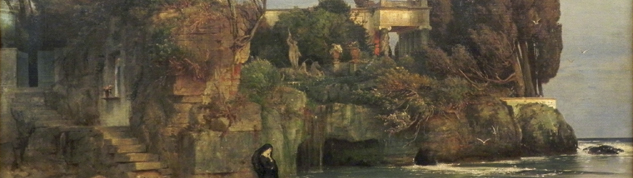
The circumstances surrounding the origins of both works are not known. According to correspondence, we can assume they were written during the years 1914–15 in Polička, where Martinů taught violin during the First World War and where he wrote works that were often inspired by extra-musical subjects, for example by literature or painting. The Ballad to Böcklin’s Picture “Villa by the Sea” H. 97 was inspired by the painting of the same name by the Swiss landscape painter Arnold Böcklin.
Because of his young age and modest background, having orchestral works performed was unlikely and, due to the war, out of the question, which can be readily seen in the scores. Martinů wrote them quickly and without revisions; the scores are auspiciously clean and without corrections. It also seems he had no interest in later promoting them, for he did not include any orchestral works from before 1918 in his later lists of works.
The scores embody a determined attempt by the composer to achieve certain goals, which left ambiguities and problematic passages. The most common problems were empty bars, note durations, the actual pitches in the transposing instruments and viola, an overabundance of notes in the winds, tremolos, fermatas, and other oversights that hinder a clear interpretation. Since there is only a single extant source for each work, it was necessary in those places that are incomplete or incorrect to offer a solution that would best respect the composer’s style and intent at the time.
With respect to the stylistic placement of the compositions, we need to ask consider which composers Martinů admired most. From the works he heard in Prague between the years 1905–18, he came to like the music of Claude Debussy the best, even though the French composer was not performed as much as Bedřich Smetana or works from the German repertoire such as Mahler, Bruckner and Strauss). It seems he was influenced by both worlds. The common characteristics of these early works – the slower tempi os, the freely unfolding passages delineated by harmonic changes, the continuously developing melodies rather than closed themes – show that in the outer formal construction, but also in the inner organization of harmonic and melodic elements, a confrontation occurred between late romantic and impressionistic styles.
The Nocturne and Ballad offer a new understanding of the context from which Bohuslav Martinů’s later works arose and are an interesting enrichment to today’s concert repertoire.
Sandra Bergmannová
from [t]akte 2/2011