



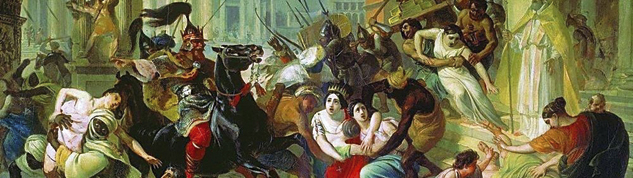
Sieg der Schönheit (The Triumph of Beauty), Telemann’s first work for the Hamburg stage, captivates through an exciting and richly varied plot, and through music which spills over with a wealth of emotions. It can be rediscovered as a theatrical work in Osnabrück in June 2012.
Georg Philipp Telemann’s first Hamburg opera was successfully premiered on 13 July 1722. It was frequently revived there until 1735, and from 1725 also in Braunschweig. The libretto was originally by Christian Heinrich Postel, perhaps the most important Hamburg opera librettist at the end of the 17th century, and is based on a Venetian model. Telemann adapted Postel’s libretto to suit the requirements of his new music and the more developed aria form of his time. For the performances in Braunschweig the opera underwent a further adaptation. In the process, the arias were retained, whilst the recitatives were probably newly composed and new dances were inserted. This is the form in which the opera has been preserved.
The historical backdrop to the plot is the capture of Rome by the Vandals under Geiserich (Gensericus) in the year 455. The victorious king, and the heroes Honoricus and Helmiges accompanying him, come upon the defeated Empress Eudoxia and her daughters and the Roman patrician Olybrius. But Eudoxia is now freed from a tyrannical usurper and husband. The various conflicts in the multi-layered plot arise from the new ruler’s demands from the women seemingly at his mercy. Each of the characters involved develops his own view of the world. Each attempts in his own way to solve the contradiction between social obligations and individual feelings. Gensericus wants to marry Eudoxia, but she initially refuses because of her previous experiences. In order to strengthen the peace, Prince Honoricus is supposed to marry Princess Pulcheria. Honoricus, however, models himself on the ideal of the stoic hero who dismisses any feelings and sees himself as immune to love. But Pulcheria has fallen in love with him and risks everything to achieve her happiness. Placidia and Olybrius have for some time been a couple striving to bring down the audacious Helmiges, whilst he forces himself on Placidia. The cultured Olybrius allows himself to be intimidated by this and is tempted to let his rival have Placidia. But the steadfast lover does not accept this behaviour. Helmiges is in turn loved by Melite, the princess’s maid. The jolly servant Turpino and the serious officer Trasimundus comment on the entanglements, each from his own point of view.
The plot is exceptionally exciting, varied and rich in contrast and presents a range of powerful emotions. It gives an opportunity for large tableaus and lively scenes culminating in duels, as well as for individual reflection. The music is just as varied as the libretto, and is distinguished by great variety, reflecting the text. Telemann shapes highly emotional, but also contemplative virtuoso and song-like arias. In the duets, the different or concurring views of the protagonists taking part are also portrayed by means of the music. Hardly any opera uses the range of instruments available at the time so extensively, and seldom is there such a wealth of surprising tonal colours. Sieg der Schönheit is a prestigious and at the same time highly expressive work.
Ute Poetzsch
from [t]akte 2/2011